Hello, I'm Valentin, a programmer. I live with Nicole my wife in a village close to Bern, Switzerland.
This is my personal website where I post my articles notes photos and reviews. I like to write about my running adventures too, it's in french over runboyrun.ch .

-
26 Oct 26

-
19 Oct 26
This one too will come handy: trigger a lambda function on the basis of a schedule expression.
The only requirement is to have a completed AWS CLI setup.
With this minimal folder:
.
├── lambda
│   ├── index.js
│   ├── lambda.zip
│   └── package.json
├── schedule.tf
With ~50 lines of infrastructure description in
schedule.tf:module "eventbridge" { source = "terraform-aws-modules/eventbridge/aws" create_bus = false # bus not needed in this case, will otherwise trigger an error: # invalid value for name (cannot be 'default') # ensures the cron is authorized to call the lambda attach_lambda_policy = true lambda_target_arns = [aws_lambda_function.lambda-func.arn] schedules = { lambda-cron = { description = "Trigger for a Lambda" # at, cron and rate functions available to define the schedule schedule_expression = "rate(5 minutes)" arn = aws_lambda_function.lambda-func.arn input = jsonencode({ "job" : "cron-by-rate" }) } } } data "archive_file" "lambda" { type = "zip" source_file = "${path.module}/lambda/index.js" output_path = "${path.module}/lambda/lambda.zip" } resource "aws_lambda_function" "lambda-func" { filename = data.archive_file.consolidate_lambda.output_path function_name = "func" role = aws_iam_role.iam_for_lambda.arn handler = "index.handler" runtime = "nodejs24.x" code_sha256 = data.archive_file.lambda.output_base64sha256 } resource "aws_iam_role" "iam_for_lambda" { name = "iam_for_lambda" assume_role_policy = data.aws_iam_policy_document.assume_role.json } data "aws_iam_policy_document" "assume_role" { statement { effect = "Allow" principals { type = "Service" identifiers = ["lambda.amazonaws.com"] } actions = [ "sts:AssumeRole" ] } }For the lambda itself, the one-liner listed on Terraform recipe: S3 Bucket with notification to Lambda Function will do it.
-
12 Oct 26
One year into reviving this website, I think it’s time for a short State of Affairs.
In Hiatus Terminus I wrote that I was excited to reclaim my space and to focus more on my journey rather than passively consume what others are doing. I’m happy to say that I’m still excited and that having a space to focus on me and my journey feels like a good thing.
Oh there’s plenty I whish would be different on my personal website. No backlog is linkable though, it lies entirely in my mind. I wish I had a search function, a slicker design, a more effective navigation, a few meta pages and on and on. But that’s okay, it’s good that these unchecked todos do not stop me from publishing and that I actually keep my own digital space alive. I think I can be proud of that.
-
05 Oct 26
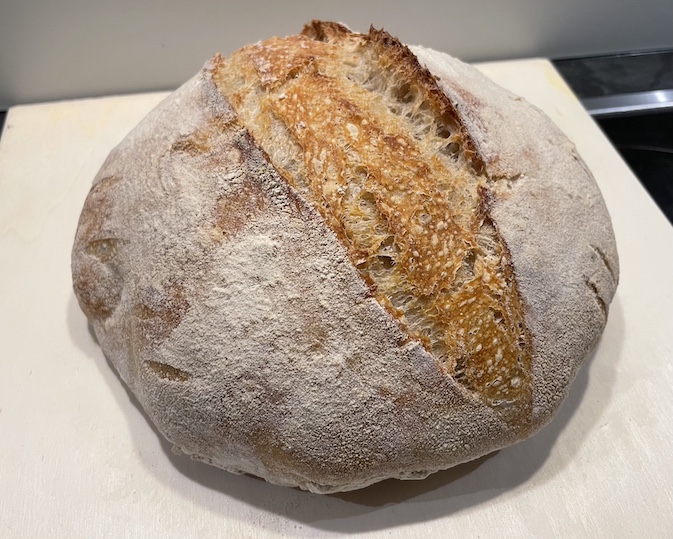
This is the end result I’m the happiest with so far when it comes to the looks. I’ve resumed my baking habit and that makes me so happy. It does not take much time and the reward is immense.
On the taste front, I must say it’s consistently good. So far I’d say, the nut variant is my number one. The one I could eat in unreasonable quantity.
I’ve been documentating each bread that I’m baking since I’ve resumed. This week I try to replicate what we got on that week of June.
-
28 Sep 26

-
21 Sep 26
Two posts I wanted to connect together because, links! Links are one of the foundational tenets of the World Wide Web, they are what keep us from spending our online life in silos. I love links.
First is the August edition of Tom MacWright’s Recently which is a monthly listing of his personal wanderings. There he wrote:
I won’t add those to the pile because I don’t want that kind of content to dominate what I mention, even if it does dominate what I read.
I find this great. I wish more would do that.
🔗 Recently – published by Tom MacWright
Second is a sideline that caught my attention. A declaration of love for links!
and no, I’m not going to dignify them with links because links are my love language
🔗 Raycast’s confetti cannon – published by Marcin Wichary
-
14 Sep 26
A couple of quotes that I’ve enjoyed from this long form article celebrating BASIC. Other times.
First time I hear about http://www.quitebasic.com/ too. Look to the source, find the the relevant javascript source and you find a practical tokenizer and simple BASIC interpreter. Very cool!
When it comes to technology, I don’t feel like a grumpy old man. Nearly always, I believe that the best of times is now. But I don’t mind saying this: The world was a better place when almost everybody who used PCs at least dabbled in BASIC.
Today, Kurtz is blunt about criticism of the language he co-created as being insufficiently serious or a dangerous way to begin learning about computer programming. “It’s B.S.,” he says. “I’ll go out on a limb and suggest the degrading of BASIC by the professionals was just a little bit of jealousy–after all, it took years for us to develop our skill; how is it that complete idiots can write programs with just a few hours of skill?”
Famously, they wrote the first draft of Altair BASIC without having access to an Altair, using a simulator they ran on a Digital Equipment PDP-10 minicomputer. “Monte Davidoff, who helped me and Bill write BASIC for the Altair, once said programming was like writing a novel,” Allen says. “That’s how we approached BASIC. We started with a plot of sorts to know the general approach we were taking. We broke the big ideas into sections, or chapters, and then we’d edit and re-edit and keep editing until we had preserved the big picture and fixed all the bugs. It was the hardest but most enjoyable work I’ve ever done.”
These computers begged to be programmed in a way that their descendants do not.
🔗 A celebration of one of technology’s biggest, most underappreciated revolutions – published on TIME on
-
07 Sep 26
-
31 Aug 26
There was no need to get anxious!
I guess, those ups and downs in the forest next to my home did the trick. 13 hours on our legs, 5 huts, hail, rain, sun, rainbow, about all one might get. My body functioned terribly well, I’m so grateful for the chance to keep up with this now tradition of one long trail run a year with Loïc.
We might have chosen the second worst possible day of the entire summer to run this tour, and yet, we’ve had SUCH A BLAST.
The official race takes place in 3 weeks, my run report will follow on runboyrun.ch.
-
23 Aug 26
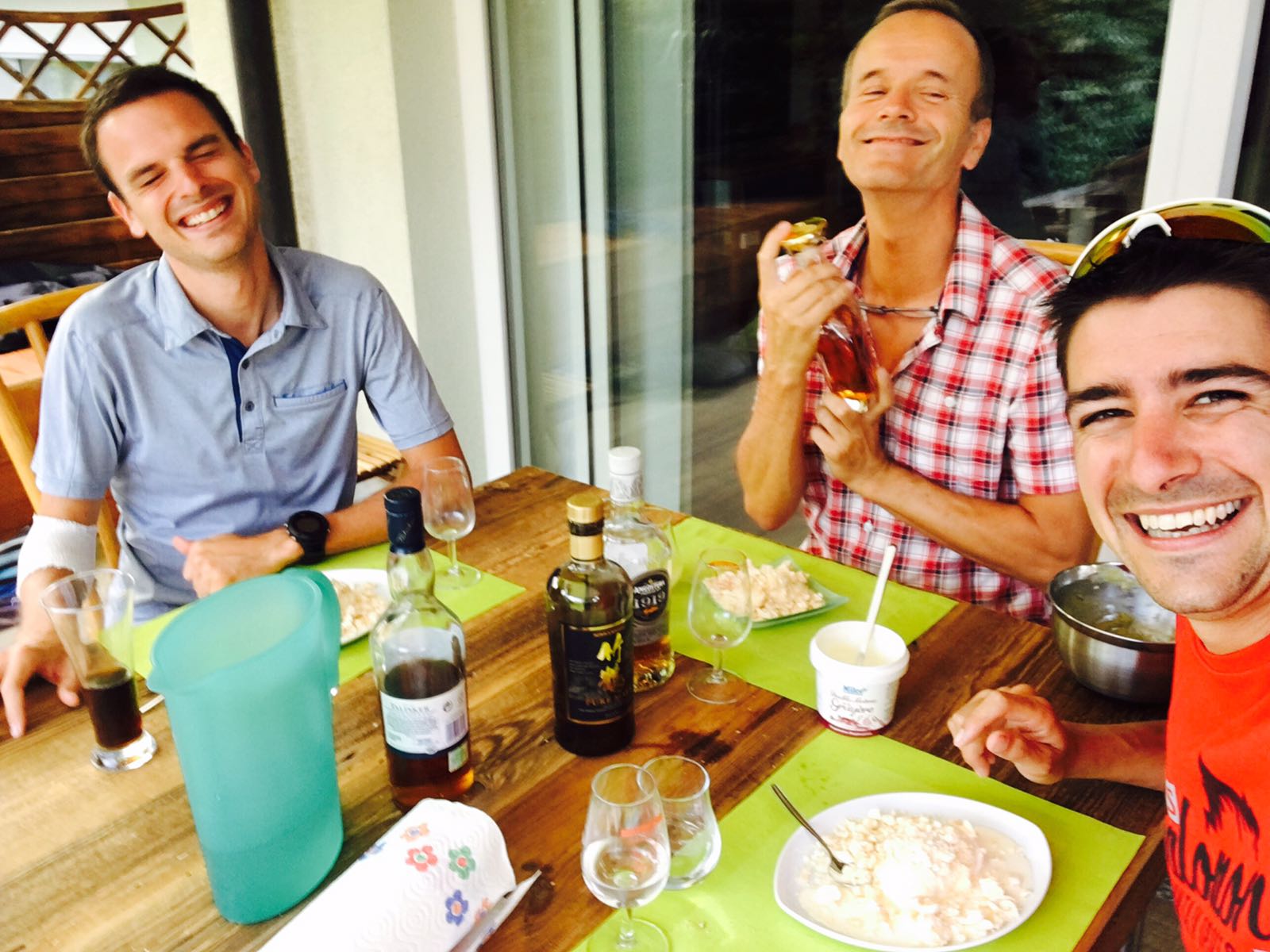
This dates back to July 2017 when Loïc and I attempted to run the Tour des Dents du Midi. I had an early fall and made us bail out at kilometer 30. Oli picked us up and offered us a moment of hospitality I don’t forget.
Almost 10 years after, we give this tour a second try. I feel excited and anxious.
